
Kitchen Splash Back Ideas: Stylish, Practical Designs for Every Kitchen

You can dramatically change your kitchen’s look with a glass splashback that balances style and function without a major remodel. Choose materials and colours that suit how you cook and clean, and you’ll get a striking focal point that also protects walls and simplifies maintenance.
Explore bold tiles, sleek glass, or durable stainless steel to match your aesthetic and daily needs; mix textures or a statement panel to personalise the space. Practical choices like wipe-clean finishes and heat-resistant surfaces keep the design looking fresh while handling real kitchen life.
Key Takeaways
Pick a splashback material that fits your cleaning habits and cooking style.
Use colour or texture to create a focal point without overwhelming the kitchen.
Prioritise durability and easy maintenance alongside visual impact.
Popular Materials for Splashbacks
Choose materials based on heat resistance, maintenance level, and the look you want. Consider durability, installation complexity, and cost per square metre when deciding.
Glass Options
A glass splashback provides a seamless, glossy surface that resists stains and is easy to wipe clean. Glazier London recommends toughened safety glass, which withstands typical kitchen heat and shatters into small, less dangerous fragments if broken.You can opt for clear, frosted, coloured, or back-painted glass. Back-painted glass splashbacks allow precise colour matching to cabinets or walls and hide grout lines, while printed or textured glass adds pattern without the maintenance of tile.Installation requires accurate measuring and usually a professional fitter like Glazier London, because glass splashback panels are cut to size and secured with silicone or stainless-steel fixings. Expect higher upfront cost than laminate, but low long-term maintenance and excellent hygiene make a glass splashback a popular choice.
Tile Choices
Tiles offer the widest design range: ceramic, porcelain, natural stone, and mosaic tiles all work well as splashbacks. Porcelain tiles are denser and more stain-resistant than ceramic, making them better for heavy-use kitchens. Grout lines need sealing and occasional cleaning; choose epoxy grout for greater stain resistance. Subway tiles are a classic, affordable option, while large-format tiles reduce grout lines for a sleeker look. Natural stone—like marble or slate—gives unique veining but needs sealing and careful maintenance to avoid staining from oils and acidic spills. Use wall-bonding adhesive and a grout suitable for your tile type to ensure longevity.
Stainless Steel Finishes
Stainless steel splashbacks provide an industrial, professional-kitchen aesthetic and excellent heat resistance behind hobs. They’re hygienic, non-porous, and tolerate high temperatures without discolouration. Finishes include brushed, mirrored, or patterned stainless steel. Brushed finishes hide scratches and fingerprints better than mirror-polish. Magnetic stainless steel panels also allow you to attach utensils or knives. Installation needs expert measuring and support; thin sheets can dent and thicker grades add cost. Clean with mild detergent and avoid abrasive pads to preserve the finish.
Acrylic and Laminate Alternatives
Acrylic and high-pressure laminate (HPL) panels offer budget-friendly, lightweight splashbacks with many colour and pattern options. Acrylic gives a glossy, glass-like look and is easier to cut and install, making it suitable for DIY projects. Laminate is durable and scratch-resistant but less heat-tolerant near high-output hobs; maintain a small gap to metal cooking surfaces or fit a heat shield. Both materials show scratches more readily than glass or steel, so choose thicker grades for better longevity. They attach with adhesive and are quick to replace, making them a good choice for rental kitchens or when you plan future updates.
Creative Colour and Design Approaches
Choose colour and surface treatments that balance personality with practicality. Think about light levels, cupboard finishes, cleaning needs and how the glass splashback will age with wear.
Bold and Vibrant Palettes
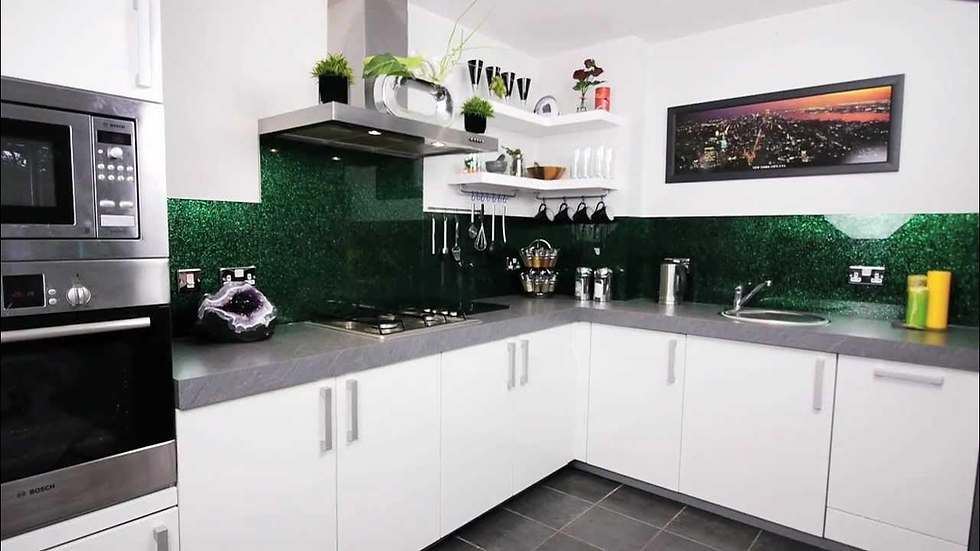
Use saturated hues to create a focal point that anchors the kitchen. Consider a deep teal or mustard yellow behind white cabinetry to add contrast without overpowering. Pair bold colours with high-gloss glass or enamel panels for easy cleaning and to amplify light reflection.
Keep sightlines clear: limit bold colour to the splashback wall or a single run between worktops and wall cabinets. If you want continuity, repeat the colour in smaller accents — a kettle, bar stools or framed artwork — to tie the room together.
Select finishes that resist staining: glazed tiles, porcelain, and acrylic sheets perform better than matte painted plaster. Test colours with samples at different times of day; artificial and natural light can shift tones significantly.
Monochrome and Neutral Schemes
Monochrome schemes deliver a refined, timeless backdrop that lets fittings and textures take centre stage. Choose layered neutrals—warm greige, soft charcoal, and off-white—so the splashback reads as subtle yet deliberate.
Combine materials for depth: a honed stone splashback next to matt cabinetry, or a linear subway tile with a dark grout, adds visual interest without introducing new colours. This approach suits open-plan spaces where cohesion matters.
Prioritise maintenance when choosing pale neutrals; select sealants and grout that resist discolouration. Use swatches against your worktop and floor to ensure the neutral palette complements metal finishes and wood tones.
Patterned and Textured Finishes
Introduce personality with patterned tiles, mosaics, or textured glass that create rhythm across the splashback. Geometric encaustic tiles work well behind a range cooker, while hand-painted tiles suit a period home and smaller sections like behind a sink.
Balance pattern scale with kitchen size: large, bold motifs suit open kitchens; small-scale repeats fit compact galley layouts. Use a plain border or slim metal trim to contain busy patterns and avoid visual clutter.
Think tactility: ridged ceramic, fluted glass, or hammered metal catches light and disguises splashes. Ensure grout joins and textured surfaces are sealed properly to prevent grease build-up and simplify cleaning.
Functional Considerations and Practical Benefits
These choices affect daily cleaning, durability against heat and moisture, and how easily the splashback is fitted. Pick materials and installation methods that match your cooking habits and maintenance tolerance.

Easy-To-Clean Surfaces
Glass splashbacks, stainless steel and large-format porcelain are the simplest to keep spotless. Glass splashbacks and stainless steel wipe clean with a microfibre cloth and mild detergent; they resist staining and don’t absorb odours. Porcelain with rectified edges reduces grout lines, so you clean far less grout than with small tiles.
Avoid textured or deeply grooved materials in high splash areas; they trap grease and require scrubbing with a nylon brush. Use a pH-neutral cleaner on natural stone to prevent etching, and seal stone annually if you choose it. For daily maintenance, a 70:30 water-vinegar mix works on most non-porous surfaces, but never use vinegar on marble or limestone.
Heat and Moisture Resistance
Place splashbacks where they’ll meet direct heat and steam from hob and kettle. Stainless steel tolerates temperatures above 200°C and won’t discolour; toughened glass splashbacks withstand typical cooking heat if fitted with aluminium or silicone trims. Ceramic and porcelain tiles handle heat well but pay attention to grout, which can deteriorate under constant steam exposure.
For boiler or extractor-proximate walls, choose non-porous materials to prevent damp and mould. Seal joints with a high-temperature silicone caulk rated for kitchens to stop moisture ingress. If you have an induction hob, any non-combustible surface works; for gas hobs, prioritise materials tested for flame resistance and low thermal expansion.
Seamless Installation Methods
Large-format panels and single-sheet splashbacks minimise seams and simplify cleaning. Acrylic or glass splashbacks mount with a continuous adhesive bead and concealed clips for a flush finish; porcelain slabs are often mechanical-fixed with hidden brackets. Tiles require either full-bed adhesive or a mechanical support system for heavy slabs to prevent movement.
Manage edges and corners with slim aluminium profiles or invisible silicone joints for a neat boundary. Ensure substrates are flat and plaster-board joints are taped and primed before fixing; uneven walls cause bowing and visible gaps. For DIY installs, use pre-cut panels or tiles with matching corner trims to reduce cutting and achieve professional-looking seams.
Inspiring Contemporary Trends
You’ll find clean lines, bold accents, and functional materials that suit busy cooking routines. Practicality and visual impact guide choices like slim grout, tactile textures, and splash-proof finishes.
Minimalist Styles
Choose large-format porcelain or a glass splashback for near-seamless coverage that reduces grout cleaning and creates a calm backdrop. Neutral tones — matte white, soft grey, charcoal — keep focus on appliances and joinery while reflecting light in compact kitchens.
Specify narrow or invisible grout joints for a continuous surface. Consider full-height splashbacks behind hobs and sinks to simplify maintenance and protect plaster. For texture without clutter, opt for subtly veined porcelain or honed stone-look tiles that mask marks.
Hardware and fittings should be streamlined: concealed fixings, slimline stainless steel trims, and handleless cabinetry complement the minimal aesthetic. Add a single tactile element — a wooden shelf or integrated lighting — to warm the scheme without breaking the pared-back look.

Retro Revival Elements
Introduce patterned encaustic or geometric tiles to inject character and period charm. Classic hexagon, arabesque, or checkerboard formats work well behind stoves or breakfast nooks as focal panels that remain easy to wipe clean when sealed.
Pick a restrained colour palette to avoid overwhelming the space: deep teal, mustard, or petrol blue paired with white or cream maintain authenticity without feeling dated. Mix plain and patterned tiles for balance — a patterned strip framed by plain tiles offers a controlled retro nod.
Accent with period-appropriate fixtures: brass taps, porcelain-faced knobs, and open shelving with vintage crockery. Keep tile sizes moderate to preserve the retro look.
For expert advice and installation of your glass splashback, contact Glazier London to achieve a stylish, practical upgrade for any kitchen. Glazier London specialises in bespoke glass splashbacks that deliver both beauty and durability, ensuring your kitchen stands out and stays easy to maintain.
For more inspiration, check out our Glass Splashback Kitchen and Made to Measure Glass Splashback blogs to refine your design choices.
Statement Features
Make a bold glass splashback the room’s focal point with mirrored glass, metallic panels, or a single slab of bookmatched marble. High-contrast choices — black fluted glass splashback or veined green marble — create drama and anchor contemporary kitchens.
Ensure durability: choose toughened glass splashback or sealed stone for heat and splash resistance. For strong visual impact without heavy maintenance, consider stainless steel with a brushed finish or enamel-coated panels that resist staining.
Glazier London recommends balancing the statement with restrained cabinetry and minimal upper storage so the glass splashback reads as an intentional design element. Integrate task lighting to highlight texture and veining; adjustable LED strips under shelves enhance depth without competing with the feature. Glazier London can help you select and install the perfect glass splashback for your kitchen, ensuring both style and functionality.


Comments